
Biometric passenger journeys: Middle East airports move beyond boarding passes
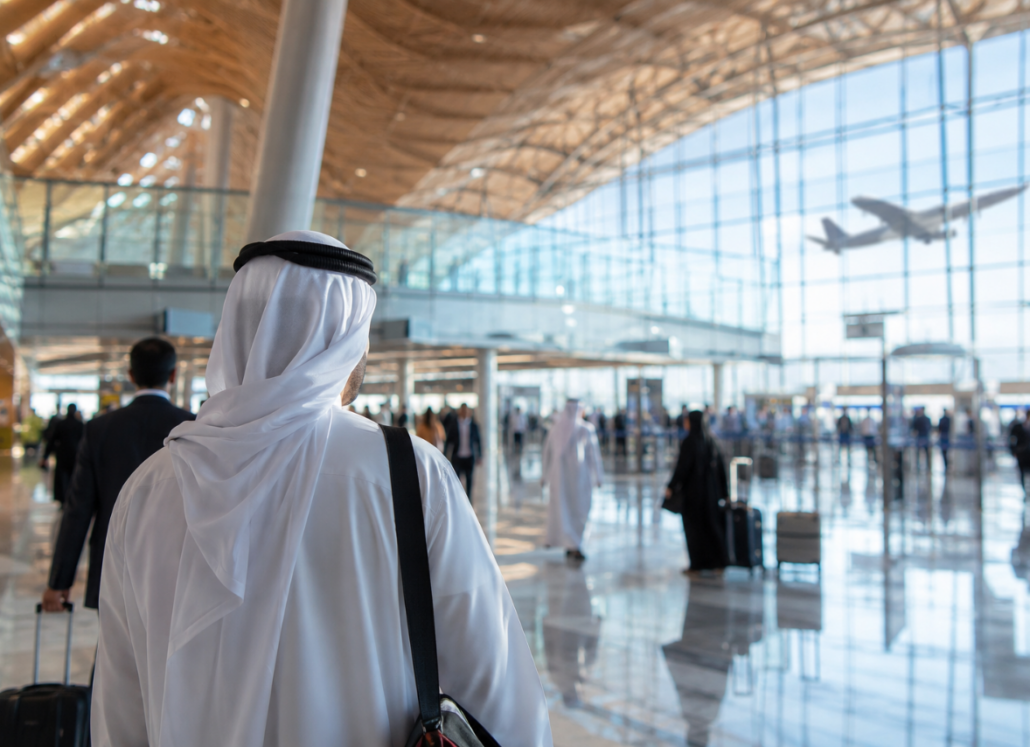
Airports across the Middle East are accelerating the deployment of biometric technologies to make passenger journeys faster, more secure and less dependent on physical documents. One of the latest examples comes from Hamad International Airport, where Qatar Airways and SITA have introduced an opt-in facial recognition service covering more than 700 airport touchpoints.
This development reflects a broader transformation. Biometrics are no longer used only at an isolated immigration desk or boarding gate. They are becoming the foundation of a continuous digital identity journey, connecting check-in, baggage handling, security and boarding.
One biometric identity throughout the airport
With Qatar Airways’ Fast Pass service, eligible passengers can enrol through the airline’s mobile application or at a self-service kiosk. Their face is securely linked to their passport and boarding pass, creating a biometric identity that can then be verified at bag-drop facilities, automated security gates and boarding gates.
Instead of repeatedly presenting a passport or scanning a boarding pass, the passenger can simply look at a biometric camera. Identity is verified at each authorized touchpoint, while the traveller continues moving through the terminal.
The objective is not only to remove documents from the process. It is to establish a reliable link between the traveller, their official identity and their journey. The same principle applies to access control in corporate buildings, airports and other sensitive environments: authenticate the person rather than relying only on a credential they carry.
Middle East airports are building more fluid journeys
Hamad International Airport is part of a wider regional movement. Dubai International Airport is expanding biometric corridors capable of verifying several passengers simultaneously, while Zayed International Airport in Abu Dhabi has introduced facial recognition across multiple stages of the passenger journey. Saudi Arabia is also deploying biometric e-gates to simplify entry and departure procedures at major airports serving international visitors and pilgrims.
These projects respond to a major operational challenge. Airports must handle growing passenger volumes without multiplying manual controls or creating additional queues. Biometrics help automate identity verification while maintaining a high level of security.
They can also improve the overall passenger experience. When authentication becomes faster and more intuitive, airport teams can focus their attention on exceptions and higher-risk situations rather than performing the same document checks at every stage.
From biometric readers to integrated identity ecosystems
The evolution of airport biometrics offers an important lesson for all access control projects. A successful system is not based only on the performance of a reader. It also depends on secure enrolment, interoperability, data protection, system integration and the ability to manage identity across several access points.
For organizations in the UAE and across the Middle East, this approach is increasingly relevant to airports, corporate headquarters, government facilities, logistics platforms and critical infrastructure.
Based in Dubai, Biotime Biometrics provides facial and fingerprint recognition solutions from IDEMIA, together with integration assistance and technical support. Its range includes contactless technologies such as VisionPass and MorphoWave™, designed to combine secure identity verification with a fluid user experience.
As Middle East airports move beyond traditional boarding passes, they are demonstrating what the next generation of access control will look like: one trusted identity, securely verified throughout an entire journey.

